Showing posts with label kde. Show all posts
Showing posts with label kde. Show all posts
Sunday, November 11, 2012
Chakra Claire-2012.10 Review
After hopping from an Ubuntu install with a broken permissions system (how is it even possible that root can't read files anymore?) to Sabayon, and promptly remembering why I left Sabayon in the first place, I have hopped to a distribution I haven ever used before: Chakra Linux. For the readers that don't know, Chakra is a Linux distribution with a very stiff, almost dictator-like control on what packages can and can't be installed from their repositories, and the default desktop environments (or the ones that are available). Take a look at why I chose to let the Chakra developers decide what was good for my computing sanity in this week's review.

Saturday, August 4, 2012
Comparison of Window Managers and Desktop Environments Reloaded
About two years ago I compared all of the popular window managers with one another. Now that I have much more experience with the different desktop environments, I am going to give the COMPLETE rundown of all of the popular graphical environments. Let's start with my personal favorite, awesome Window Manager.
Awesome Window Manager

If KDE is a sword then Awesome Window Manager is a rock. It is a blunt environment that requires a knowledge of Lua to configure it. Windows tile and using the keyboard is pretty much necessary. This would be a very unfamiliar environment for someone coming from a floating Window Manager. However, the stock keyboard combinations and the efficiency of tiling combined with the number of tags by default make it a powerful tool in the hands of an advanced user. Awesome can be customized to do anything the user wants, and if that is an appealing trait and you have the time to configure it to no end then use awesome Window Manager.
Ease-of-Use: 2
Speed: 10
Aesthetics: 4
Productivity: 8
K desktop environment and Kwin

KDE is an impressive desktop environment to say the least. It has received flack online for its bloat, and that is a true problem. Services and superfluous programs clog the environment and bog it down, consuming RAM in the process. The desktop effects will require a graphics card and can slow any other task requiring one down, requiring them to be shut off. The true power of KDE comes from the very trait that gives it a bad reputation: the bloat. If there is something you want your window manager to do, KDE has a tool to do it.
With different activities you can transform your desktop into an Androidd-esque launcher, or set the wallpaper to monitor the local weather or simulate a virus. Tiling Windows, completely customizable keyboard shortcuts delimited by category, and the suite of applications that come as a part of KDE are just some of the great things that KDE has to offer.
Ease-of-Use: 9
Speed: 5
Aesthetics: 9
Productivity: 6
Unity
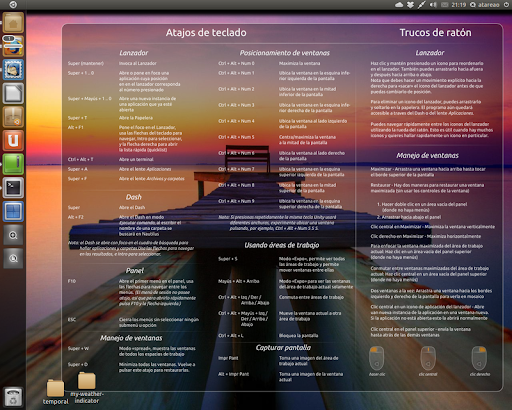
Unity is Canonical's modern user interface for their Ubuntu operating system. Unity was created after a fight with the Gnome 3 developers, and it prompted Gnome to create their own operating system to compete with Ubuntu. [opinion]Unity blows Gnome out of the water.[/opinion] In Ubuntu 11.04 Unity was a mess, but ever since 12.04 and Unity 5 it is a usable interface. It runs GTK, so Gnome programs don't pull a mess of dependencies. It also comes in 2d in the event of a weak graphics card, so Unity will run faster.
Unity is the least customizable of the bunch. There is a launcher on the left side of your screen. There are no options regarding this. The extent of theming that can be done ends with GTK and Icon themes and setting the Opacity of the integrated File menu.
Unity offers a unique feature called the HUD that can search through their integrated file menu (GTK and Qt applications move their options bar to the top of the desktop. This can be disabled.) The HUD is a tool of great productivity, and it learns like Gnome do does. The alt key brings it up and within a few keystrokes you can find an item from the context menu that would have taken a whole minute to navigate to by mouse.
Ease-Of-Use: 8
Speed: 4
Aesthetics: 8
Productivity: 8
Gnome 3
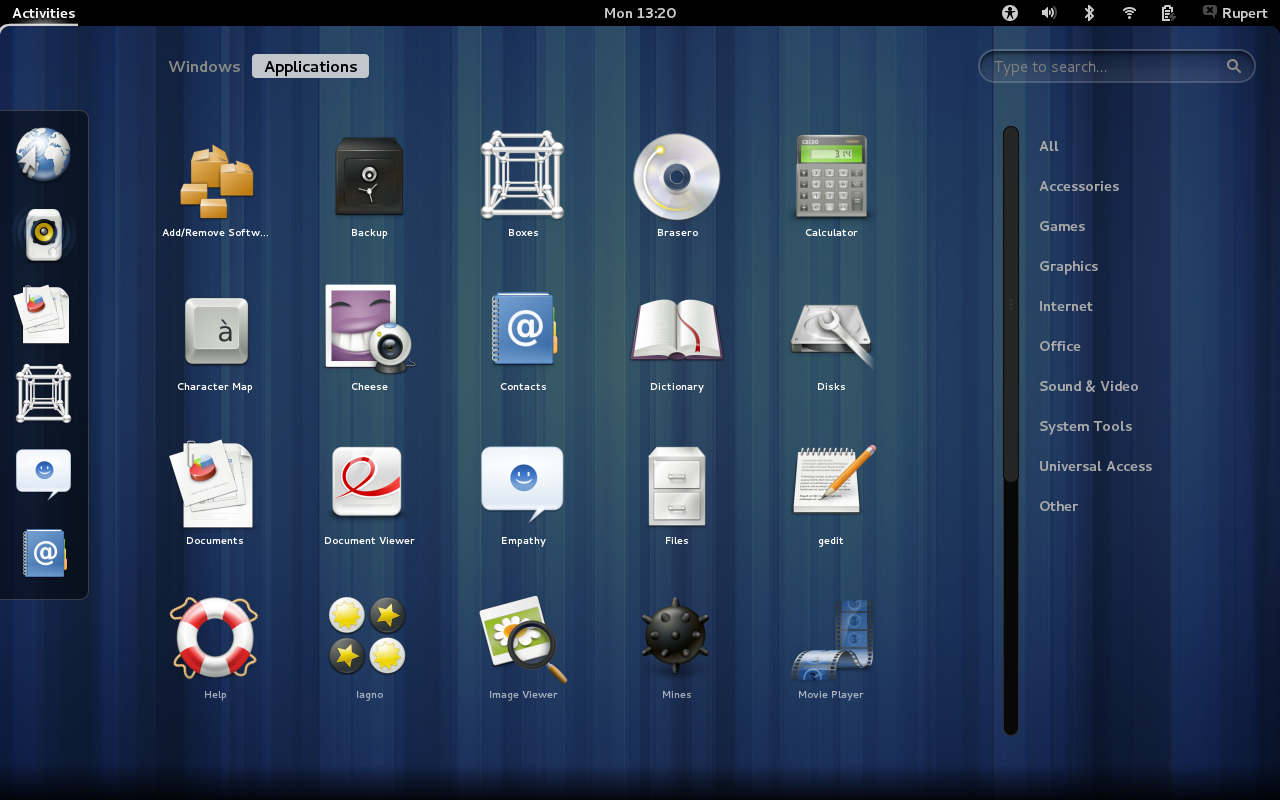
It only makes sense to write about Gnome after the entry about Unity. Gnome is, as Linus Torvalds himself described it: "A train-wreck". A few of the sparse good things to say about gnome are that it is themable and it can be extended with addons or with alterations to the internal settings. Gnome 3 comes with insane defaults (like only having the close button on the control bar and the notifications popping up from the bottom and waiting to be dismissed). If Gnome 3 were lightweight and ran a bit faster it would be a viable candidate. It doesn't, though. It consumes more memory than the plasma-desktop from KDE and does not have an option to lessen the effects like other Desktop Environments.
Ease-Of-Use: 6
Speed: 5
Aesthetics: 8 (the one good thing to say)
Productivity: 4
XFCE
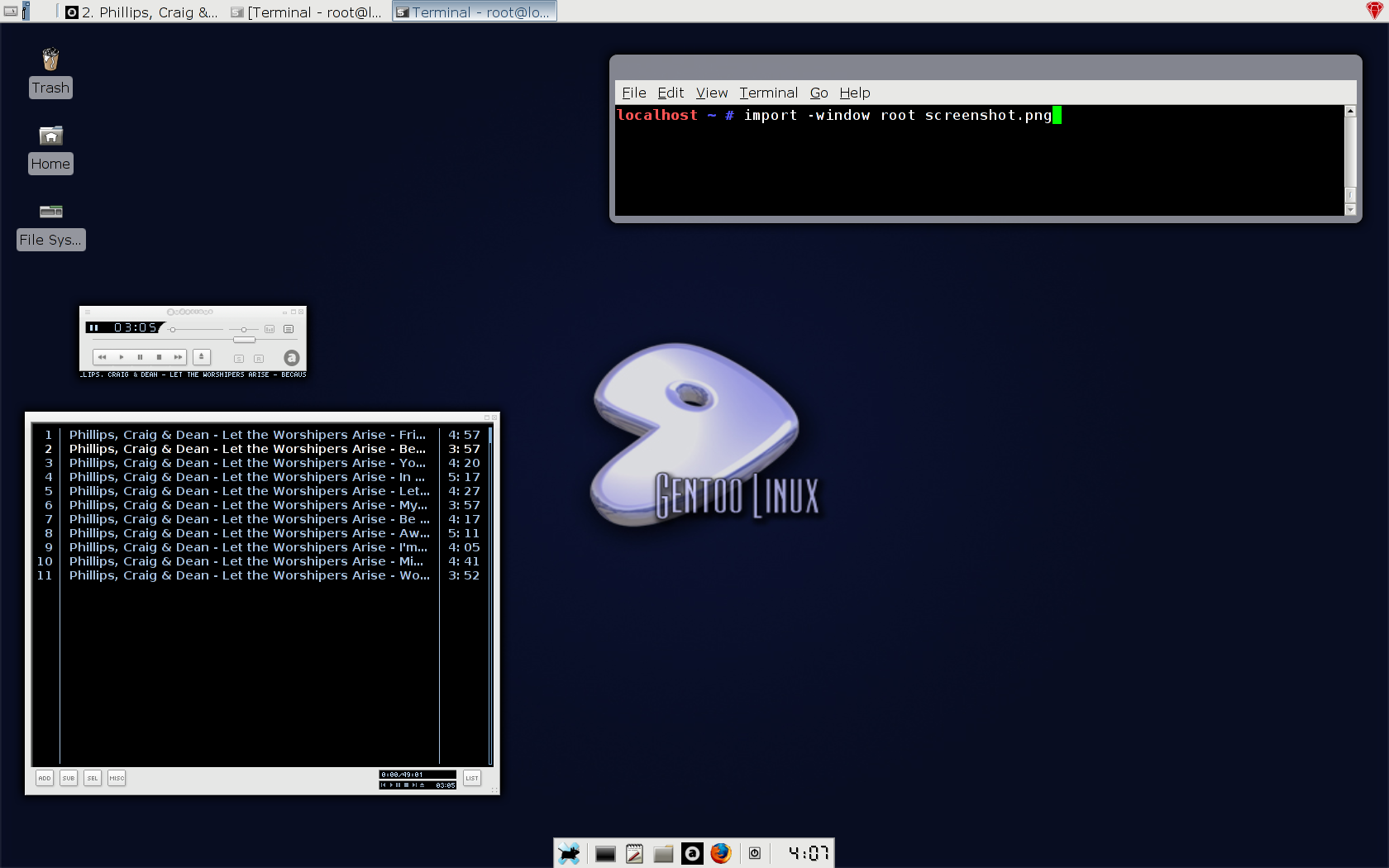
Xfce is most well-known for being a lightweight, low-impact desktop environment. Xfce lives up to that reputation, having a RAM consumption only above that of LXDE and Awesome. In addition to being light it is still aesthetically pleasing and has enough tools to customize it to any user's heart's content (even moreso since 4.10 released the mine type editor).
The workspace system is a bit fluky at times, but that is the only real gripe that XFCE can get. I call this one error "leashed windows". Windows that have focus follow you to other workspaces. This usually only applies to switching using keyboard shortcuts.
Just like Gnome 2.0 it comes with a panel to search through applications, and option to make launchers and links from the desktop, and applets for its panels. It improves on this with a dock (which many users, myself included, purge and replace with tint2 or another dock application) and a good settings tool. XFCE can do some very advanced things. It can even change its Window Manager. Awesome window manager inside XFCE? You bet.
Most of XFCE's applications can be run outside of XFCE, even the window manager. So you can use any combination of XFCE and another environment of your choice while still keeping a low memory profile since XFCE has very few runtime dependencies.
Ease-Of-Use: 8
Speed: 9
Aesthetics: 6 (But customizable to the point of 10)
Productivity: 8
LXDE

LXDE is a set of tools that combines with the Openbox window manager to create a graphical environment unmatched when it comes to ease-of-use combined with shear speed. Some have argued that because of the seperation of desktop environemnt and window manager that LXDE has a "hacky" feel to it. This is not the case. LXDE is a ligthweight XFCE with Openbox's graphical configuration tools. Lxterminal rivals Gnome terminal, and Lxappearance rivals myunity for theme configuration. In fact, lxappearance is the go-to application for changing gtk themes on other desktop environments, not just LXDE. Some of the default software is chosen well too. Pcmanfm as the file manager, for instance, goes along with the lightweight feel of LXDE. Like KDE and XFCE you can change LXDE's window manager from its configuration dialog.
Ease-of-use: 6
Speed: 7
Aesthetics: 5
Productivity: 7
Enlightenment 17

Enlightenment 17, e17 for short, is an odd desktop environment and graphical library suite written by the enlightenment foundation. It improved heavily on e16 and handles a lot of configuration on its first-time-run dialog. It can be heavily extended through configuration files, but otherwise it remains at the beautiful default.There are issues with the file manager handling the desktop, however, and it may throw the entire look-and-feel of the environment off.
E17 really needs some work. I have had graphical problems and just found it counter-intuitive after it has been set up.
Ease-of-use: 5
Speed: 5
Aesthetics: 9
Productivity: 5
Dynamic Window Manager

Dynamic window manager is a popular dynamic window manager. Dynamic means that the window manager can float or tile, and in DWM's case monocle and spiral. DWM has no configuration tools and the only way to modify it is via the C source code directly. DWM developers have a philosophy that restricts the window manager to only 2000 lines of code, so large improvements cannot be made. Furthermore, users looking to use a mouse are going to feel left out. Although a mouse can minimally interact with the window manager a user with anything but a keyboard and combinations will be lost.
Ease-of-use: 1
Speed: 10
Aesthetics: 3
Productivity: 5
Cinnamon

When I first tried the most recent version of Linux Mint it came with Cinnamon - their home-grown desktop environment forked from Gnome 3. Cinnamon is the MATE of Gnome 3, you could say.
Cinnamon did not disappoint on the aesthetics. It was visually appealing to the last detail (as it was configured in mint, at least) and had the ability to be themed. The menu is one of the smartest (from a searching and design point-of-view) menus around. From one menu you can search for applications, search by category, and access bookmarked applications. The searching works as good as Gnome 3's does, so you can still use an application if you do not know its name.
Cinnamon comes with a feature called Expo that is one of its selling points. Expo can show a spread of all of your workspaces, and upon hovering over one a cascade of all the windows in that workspace. Clicking on a window will take you to that particular workspace and application window. If you have used Compiz expo, this is the same feature but integrated in the desktop environment.
There were two issues with cinnamon. The menu took 2 seconds and 17% CPU for a few seconds to open. I talked to a Cinnamon developer via IRC about this problem and he confirmed that it had been fixed and will be released in the next major cinnamon update. Along the lines of bugs there are memory leaks in Cinnamon, so it requires a restart after multiple hours of running to free some RAM.
Another problem is that some of the layouts do not work at times, but at other times they do. There was no word on whether or not this would be fixed or whether or not it is really an issue. Another issue (not a bug) is the lacking of some advanced features from the cinnamon settings dialog, but advanced settings can still be configured with dconf.
Ease-of-use 7
Speed: 4
Aesthetics: 7
Productivity: 4
Others
TWM - Tab window manager. I have not used this long enough to give a definitive answer, but when I used it the window manager worked as it was intended - which isn't enough.
MATE - Displaced by cinnamon
Verdict:
For pure productivity
Awesome Window Manager is the most productive of the window managers if the user has the patience to edit the lua configuration file and learn the keyboard shortcuts.
Speed
For speed dynamic window manager wins. 2000 lines of code execute blazingly fast.
Aesthetics
KDE wins the aesthetics prize, especially if the advanced desktop effects are enabled with the search and launch activity.
Ease-of-use
Once again KDE wins this prize. Everything is handled for the user.
Final Verdict
KDE is the overall best desktop environment, but each has its own niche. To truly determine the best environment, using all of them and deciding on your own is the best way to make a decision.
Awesome Window Manager

If KDE is a sword then Awesome Window Manager is a rock. It is a blunt environment that requires a knowledge of Lua to configure it. Windows tile and using the keyboard is pretty much necessary. This would be a very unfamiliar environment for someone coming from a floating Window Manager. However, the stock keyboard combinations and the efficiency of tiling combined with the number of tags by default make it a powerful tool in the hands of an advanced user. Awesome can be customized to do anything the user wants, and if that is an appealing trait and you have the time to configure it to no end then use awesome Window Manager.
Ease-of-Use: 2
Speed: 10
Aesthetics: 4
Productivity: 8
K desktop environment and Kwin
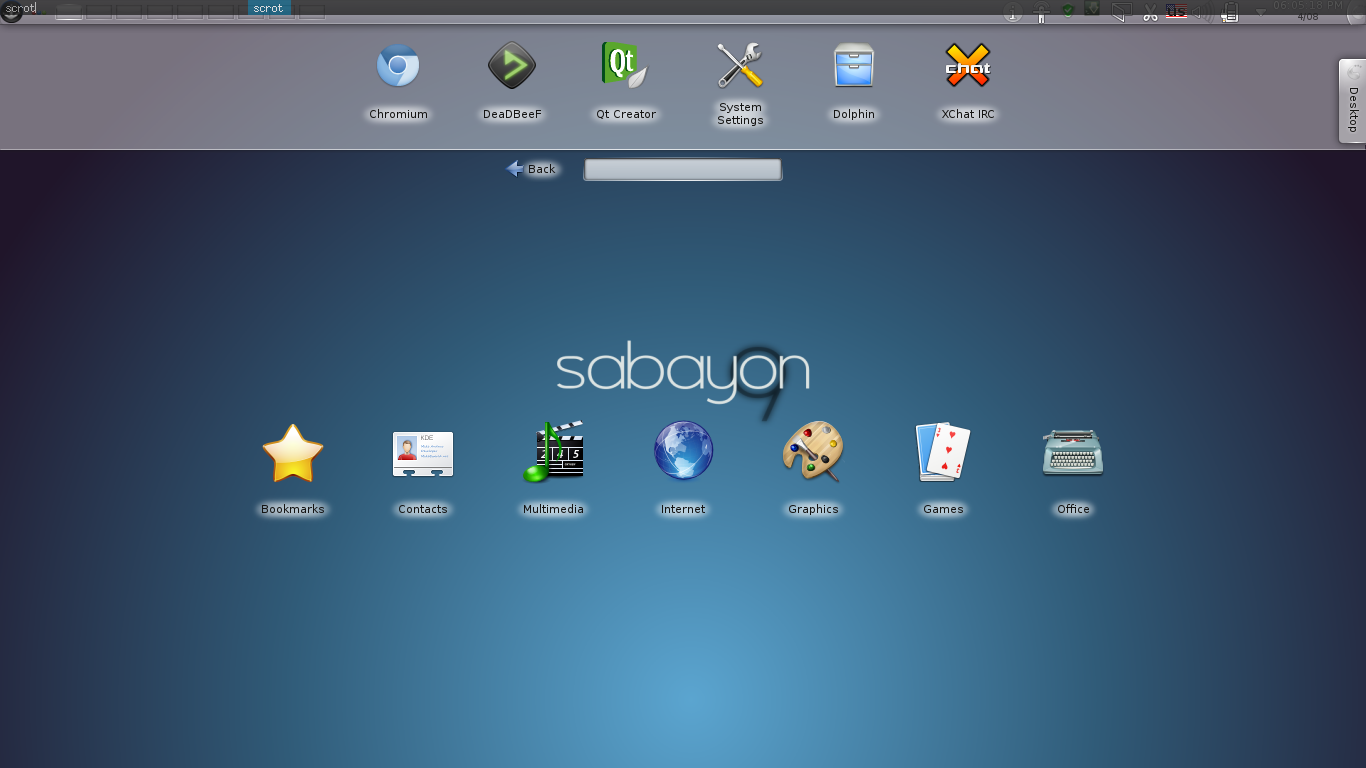
KDE is an impressive desktop environment to say the least. It has received flack online for its bloat, and that is a true problem. Services and superfluous programs clog the environment and bog it down, consuming RAM in the process. The desktop effects will require a graphics card and can slow any other task requiring one down, requiring them to be shut off. The true power of KDE comes from the very trait that gives it a bad reputation: the bloat. If there is something you want your window manager to do, KDE has a tool to do it.
With different activities you can transform your desktop into an Androidd-esque launcher, or set the wallpaper to monitor the local weather or simulate a virus. Tiling Windows, completely customizable keyboard shortcuts delimited by category, and the suite of applications that come as a part of KDE are just some of the great things that KDE has to offer.
Ease-of-Use: 9
Speed: 5
Aesthetics: 9
Productivity: 6
Unity
Unity is Canonical's modern user interface for their Ubuntu operating system. Unity was created after a fight with the Gnome 3 developers, and it prompted Gnome to create their own operating system to compete with Ubuntu. [opinion]Unity blows Gnome out of the water.[/opinion] In Ubuntu 11.04 Unity was a mess, but ever since 12.04 and Unity 5 it is a usable interface. It runs GTK, so Gnome programs don't pull a mess of dependencies. It also comes in 2d in the event of a weak graphics card, so Unity will run faster.
Unity is the least customizable of the bunch. There is a launcher on the left side of your screen. There are no options regarding this. The extent of theming that can be done ends with GTK and Icon themes and setting the Opacity of the integrated File menu.
Unity offers a unique feature called the HUD that can search through their integrated file menu (GTK and Qt applications move their options bar to the top of the desktop. This can be disabled.) The HUD is a tool of great productivity, and it learns like Gnome do does. The alt key brings it up and within a few keystrokes you can find an item from the context menu that would have taken a whole minute to navigate to by mouse.
Ease-Of-Use: 8
Speed: 4
Aesthetics: 8
Productivity: 8
Gnome 3
It only makes sense to write about Gnome after the entry about Unity. Gnome is, as Linus Torvalds himself described it: "A train-wreck". A few of the sparse good things to say about gnome are that it is themable and it can be extended with addons or with alterations to the internal settings. Gnome 3 comes with insane defaults (like only having the close button on the control bar and the notifications popping up from the bottom and waiting to be dismissed). If Gnome 3 were lightweight and ran a bit faster it would be a viable candidate. It doesn't, though. It consumes more memory than the plasma-desktop from KDE and does not have an option to lessen the effects like other Desktop Environments.
Ease-Of-Use: 6
Speed: 5
Aesthetics: 8 (the one good thing to say)
Productivity: 4
XFCE
Xfce is most well-known for being a lightweight, low-impact desktop environment. Xfce lives up to that reputation, having a RAM consumption only above that of LXDE and Awesome. In addition to being light it is still aesthetically pleasing and has enough tools to customize it to any user's heart's content (even moreso since 4.10 released the mine type editor).
The workspace system is a bit fluky at times, but that is the only real gripe that XFCE can get. I call this one error "leashed windows". Windows that have focus follow you to other workspaces. This usually only applies to switching using keyboard shortcuts.
Just like Gnome 2.0 it comes with a panel to search through applications, and option to make launchers and links from the desktop, and applets for its panels. It improves on this with a dock (which many users, myself included, purge and replace with tint2 or another dock application) and a good settings tool. XFCE can do some very advanced things. It can even change its Window Manager. Awesome window manager inside XFCE? You bet.
Most of XFCE's applications can be run outside of XFCE, even the window manager. So you can use any combination of XFCE and another environment of your choice while still keeping a low memory profile since XFCE has very few runtime dependencies.
Ease-Of-Use: 8
Speed: 9
Aesthetics: 6 (But customizable to the point of 10)
Productivity: 8
LXDE
LXDE is a set of tools that combines with the Openbox window manager to create a graphical environment unmatched when it comes to ease-of-use combined with shear speed. Some have argued that because of the seperation of desktop environemnt and window manager that LXDE has a "hacky" feel to it. This is not the case. LXDE is a ligthweight XFCE with Openbox's graphical configuration tools. Lxterminal rivals Gnome terminal, and Lxappearance rivals myunity for theme configuration. In fact, lxappearance is the go-to application for changing gtk themes on other desktop environments, not just LXDE. Some of the default software is chosen well too. Pcmanfm as the file manager, for instance, goes along with the lightweight feel of LXDE. Like KDE and XFCE you can change LXDE's window manager from its configuration dialog.
Ease-of-use: 6
Speed: 7
Aesthetics: 5
Productivity: 7
Enlightenment 17

Enlightenment 17, e17 for short, is an odd desktop environment and graphical library suite written by the enlightenment foundation. It improved heavily on e16 and handles a lot of configuration on its first-time-run dialog. It can be heavily extended through configuration files, but otherwise it remains at the beautiful default.There are issues with the file manager handling the desktop, however, and it may throw the entire look-and-feel of the environment off.
E17 really needs some work. I have had graphical problems and just found it counter-intuitive after it has been set up.
Ease-of-use: 5
Speed: 5
Aesthetics: 9
Productivity: 5
Dynamic Window Manager
Dynamic window manager is a popular dynamic window manager. Dynamic means that the window manager can float or tile, and in DWM's case monocle and spiral. DWM has no configuration tools and the only way to modify it is via the C source code directly. DWM developers have a philosophy that restricts the window manager to only 2000 lines of code, so large improvements cannot be made. Furthermore, users looking to use a mouse are going to feel left out. Although a mouse can minimally interact with the window manager a user with anything but a keyboard and combinations will be lost.
Ease-of-use: 1
Speed: 10
Aesthetics: 3
Productivity: 5
Cinnamon

When I first tried the most recent version of Linux Mint it came with Cinnamon - their home-grown desktop environment forked from Gnome 3. Cinnamon is the MATE of Gnome 3, you could say.
Cinnamon did not disappoint on the aesthetics. It was visually appealing to the last detail (as it was configured in mint, at least) and had the ability to be themed. The menu is one of the smartest (from a searching and design point-of-view) menus around. From one menu you can search for applications, search by category, and access bookmarked applications. The searching works as good as Gnome 3's does, so you can still use an application if you do not know its name.
Cinnamon comes with a feature called Expo that is one of its selling points. Expo can show a spread of all of your workspaces, and upon hovering over one a cascade of all the windows in that workspace. Clicking on a window will take you to that particular workspace and application window. If you have used Compiz expo, this is the same feature but integrated in the desktop environment.
There were two issues with cinnamon. The menu took 2 seconds and 17% CPU for a few seconds to open. I talked to a Cinnamon developer via IRC about this problem and he confirmed that it had been fixed and will be released in the next major cinnamon update. Along the lines of bugs there are memory leaks in Cinnamon, so it requires a restart after multiple hours of running to free some RAM.
Another problem is that some of the layouts do not work at times, but at other times they do. There was no word on whether or not this would be fixed or whether or not it is really an issue. Another issue (not a bug) is the lacking of some advanced features from the cinnamon settings dialog, but advanced settings can still be configured with dconf.
Ease-of-use 7
Speed: 4
Aesthetics: 7
Productivity: 4
Others
TWM - Tab window manager. I have not used this long enough to give a definitive answer, but when I used it the window manager worked as it was intended - which isn't enough.
MATE - Displaced by cinnamon
Verdict:
For pure productivity
Awesome Window Manager is the most productive of the window managers if the user has the patience to edit the lua configuration file and learn the keyboard shortcuts.
Speed
For speed dynamic window manager wins. 2000 lines of code execute blazingly fast.
Aesthetics
KDE wins the aesthetics prize, especially if the advanced desktop effects are enabled with the search and launch activity.
Ease-of-use
Once again KDE wins this prize. Everything is handled for the user.
Final Verdict
KDE is the overall best desktop environment, but each has its own niche. To truly determine the best environment, using all of them and deciding on your own is the best way to make a decision.
Tuesday, July 19, 2011
Comparison of Desktop environments
This article is ever-so-slightly deprecated. Please see: http://profectium.blogspot.com/2012/08/comparison-of-window-managers-and.html
As you saw in my post below I do not use Unity. I use the currently unstable version of Gnome 3 on my Ubuntu operating system. Today's post is about comparing some popular desktop environments for Linux. XFCE / tiling fans, I'm sorry, but I am not included you in this debate. I do not have any experience with XFCE or many tiling window managers and I wouldn't be able to give a fair report on them.
What desktop environment you choose is a matter of preferences. From the four I have used they all did the same thing in a different, sometimes prettier way.
Unity
 The Ubuntu development team dropped Gnome as their default desktop environment on their release of version 11.04 - Natty Narwhal. They swapped it out with a more modern looking desktop environment called Unity. The key features of Unity are a taskbar (With a very intelligent window-dodge system) and header-window integration. For instance, when you open Libreoffice the options file, edit, view, all go to the top panel. As with most Linux desktop environments they can be customized heavily through themes. Unity suffers from a lack of customizability. No matter what color scheme you use or what desktop effects you want you will still always have the taskbar and integration panel hanging around. It is also hard to use for beginners. Icons from the launcher can't be removed and placed on the desktop as you might think. You need to make a whole new launcher to get desktop icons.
Some good points to make about this desktop environment is the familiarity Windows 7 users will have with be able to keep launchers for their favorite apps. This is something that old Gnome versions couldn't do prettily. It also reduces the amount of distraction and increases the screen size for maximum viewing convenience.
Gnome 3
 I have used Gnome 3 longer than any other desktop environment. It retained it's ability to be highly customized but also had a very appealing user interface. It can be confusing to start off with because of the lack of minimize and maximize buttons, a dock, or the lack of a file-managing desktop. (All of which can be changed with software like gnome-tweak-tool and docky). The most powerful part of Gnome 3 is something that I called the Sea of Windows (Shown to the left in the picture). It is activated by moving your mouse cursor to the top left corner of the screen (Similar to how the Unity launcher is summoned). There will be a ripple effect and it will show all of your open windows and processes(like Dropbox or Screenlets). This is also where the favorites bar is kept and where Launchers can be stored. Everything in the Sea of Windows is customizable through gtk 3.x themes and gnome-shell themes. (Gnome shell themes being the one that changes this part of the DE).
This paragraph used to be about the instability of gnome when trying to install it on Ubuntu 11.04, and yes, that is a very bad idea if you do not want to kill Unity. It may even make both desktop environments flawed if something goes terribly wrong. However, Ubuntu 11.10 is out and it has fixed the compatibility issues of having Gnome and Unity installed at the same time. In addition to fixing the problem, Gnome 3 has been added to the Ubuntu repositories, so installing it is as simple as using the software center.
Enlightenment 17

I will admit right off the bat that I have little good to say about E17. It's selling point is the lightweight beauty that it has. It is true that for someone willing to make their DE a hobby that E17 is the best out their for only 4 Megabytes. Some things I noticed was the bottom bar was confusing to use at times and was terrible at hiding itself. It would always overlap any window that entered it's territory. Maximizing and minimizing buttons were included but completely broken. Right click doesn't work on the desktop because left-click takes it's place. It comes with no detection of previously edited global shortcuts, which I didn't really expect it too.
The only good parts about E17 is that is has the potential to be great AND it is incredibly lightweight (4MB). It comes as sort of a template. But for people not willing to spend days tuning it to their liking it is just not for them.
Kde 4.6 - Plasma Workspace
 I haven't used KDE for quite some time (since about 4.6) the reason being after about two weeks of using it on Ubuntu 11.04 it decided to not boot for me anymore. Also, at every boot I would need to sudo remove kde-window manager, sudo install kde-winder-manager just to get it working.
The release of KDE 4 attempted to change the style of the DE into a prettified masterpiece. One of the first things I discovered was the built-in desktop settings manager. Straight out of the box I was able to activate my wobbly windows, change my color schemes around, and add widgets without having to leave my desktop. Windows users would find it easy to use as well because of the K menu, which resembles the start globe from Windows Vista and Windows 7. There are little things thrown into this desktop environment that make it what it is. Things so small most of the time they go unnoticed. For instance, when a window closes it doesn't abruptly shut down. It sinks into a center point and fades away. Or when a popup from the side of the screen comes out it will glide back to where it came from.
KDE's desktop effects can be turned off with the command alt+shift+f12 if you have a bad/old graphics card. Upon installation it checks to see if your settings allow you to run the Plasma workspace, so it may already be off by default.
The only bad things to say about this desktop environment are that it is not lightweight and that Gnome applications (If you install it over Gnome) keep themes. The download of Kubuntu(Ubuntu with KDE instead of Unity by default) is around 140MB if you already have the kernel and Libreoffice(It tries to install the Libreoffice suite on installation).
Kubuntu will also install KDE-related software if you don't deselect it. (Don't unless you know what you are doing. The Window manager is NOT enough to run KDE). This could lead to jumbled app lists like a System Settings Clone or Kate and Gedit. Two programs that do the same thing but each designed for another DE. Any program from Gnome works on KDE and vice versa, though. Like I mentioned earlier only KDE applications retain themes in KDE.
Extra: KDE can be installed on Windows and Mac too.
KDE also features a Sea of Windows, but it needs work.
The Verdict
Originally this paragraph hailed KDE as the winner of my competition, but now I feel that Gnome 3.2 has blown it out of the water. This is just opinion, since all of them are very usable desktop. There are the occasional crashes with Gnome, but it's simple, efficient when you start learning the ins and outs of the system (like wikipedia querys from the application search bar), and customizable through CSS. The height of the interference to the user is the occasional popup of the process dock and the always-present activities bar.
To download Gnome 3 your distribution probably has it in the repositories. If not and you would like to try it, there are other versions of Linux that were built with Gnome 3 in mind, like Fedora 16.
As you saw in my post below I do not use Unity. I use the currently unstable version of Gnome 3 on my Ubuntu operating system. Today's post is about comparing some popular desktop environments for Linux. XFCE / tiling fans, I'm sorry, but I am not included you in this debate. I do not have any experience with XFCE or many tiling window managers and I wouldn't be able to give a fair report on them.
What desktop environment you choose is a matter of preferences. From the four I have used they all did the same thing in a different, sometimes prettier way.
Unity

Some good points to make about this desktop environment is the familiarity Windows 7 users will have with be able to keep launchers for their favorite apps. This is something that old Gnome versions couldn't do prettily. It also reduces the amount of distraction and increases the screen size for maximum viewing convenience.
Gnome 3

This paragraph used to be about the instability of gnome when trying to install it on Ubuntu 11.04, and yes, that is a very bad idea if you do not want to kill Unity. It may even make both desktop environments flawed if something goes terribly wrong. However, Ubuntu 11.10 is out and it has fixed the compatibility issues of having Gnome and Unity installed at the same time. In addition to fixing the problem, Gnome 3 has been added to the Ubuntu repositories, so installing it is as simple as using the software center.
Enlightenment 17

I will admit right off the bat that I have little good to say about E17. It's selling point is the lightweight beauty that it has. It is true that for someone willing to make their DE a hobby that E17 is the best out their for only 4 Megabytes. Some things I noticed was the bottom bar was confusing to use at times and was terrible at hiding itself. It would always overlap any window that entered it's territory. Maximizing and minimizing buttons were included but completely broken. Right click doesn't work on the desktop because left-click takes it's place. It comes with no detection of previously edited global shortcuts, which I didn't really expect it too.
The only good parts about E17 is that is has the potential to be great AND it is incredibly lightweight (4MB). It comes as sort of a template. But for people not willing to spend days tuning it to their liking it is just not for them.
Kde 4.6 - Plasma Workspace

The release of KDE 4 attempted to change the style of the DE into a prettified masterpiece. One of the first things I discovered was the built-in desktop settings manager. Straight out of the box I was able to activate my wobbly windows, change my color schemes around, and add widgets without having to leave my desktop. Windows users would find it easy to use as well because of the K menu, which resembles the start globe from Windows Vista and Windows 7. There are little things thrown into this desktop environment that make it what it is. Things so small most of the time they go unnoticed. For instance, when a window closes it doesn't abruptly shut down. It sinks into a center point and fades away. Or when a popup from the side of the screen comes out it will glide back to where it came from.
KDE's desktop effects can be turned off with the command alt+shift+f12 if you have a bad/old graphics card. Upon installation it checks to see if your settings allow you to run the Plasma workspace, so it may already be off by default.
The only bad things to say about this desktop environment are that it is not lightweight and that Gnome applications (If you install it over Gnome) keep themes. The download of Kubuntu(Ubuntu with KDE instead of Unity by default) is around 140MB if you already have the kernel and Libreoffice(It tries to install the Libreoffice suite on installation).
Kubuntu will also install KDE-related software if you don't deselect it. (Don't unless you know what you are doing. The Window manager is NOT enough to run KDE). This could lead to jumbled app lists like a System Settings Clone or Kate and Gedit. Two programs that do the same thing but each designed for another DE. Any program from Gnome works on KDE and vice versa, though. Like I mentioned earlier only KDE applications retain themes in KDE.
Extra: KDE can be installed on Windows and Mac too.
KDE also features a Sea of Windows, but it needs work.
The Verdict
Originally this paragraph hailed KDE as the winner of my competition, but now I feel that Gnome 3.2 has blown it out of the water. This is just opinion, since all of them are very usable desktop. There are the occasional crashes with Gnome, but it's simple, efficient when you start learning the ins and outs of the system (like wikipedia querys from the application search bar), and customizable through CSS. The height of the interference to the user is the occasional popup of the process dock and the always-present activities bar.
To download Gnome 3 your distribution probably has it in the repositories. If not and you would like to try it, there are other versions of Linux that were built with Gnome 3 in mind, like Fedora 16.
Subscribe to:
Posts (Atom)